Bèljik: Sechrès la Ekspoze Gwo Depandans sou Fontane Jan chèchè yo di, varyete solid yo ap parèt nan plizyè ane.

Takeaways kle yo
- 50% plus of Belgium's potato area is planted to Fontane
- 20% below the five-year average: Boerenbond yield estimate
- 5 years of testing minimum before processors list a variety
- 4 threats cited: nematodes, late blight, drought and heat
Poukisa li enpòtan
- Pou kiltivatè yo
- Growers facing contract shortfalls should document size and length data now and negotiate delivery flexibility with processors, as NEPG recommends.
- Pou procesè yo
- Fry makers should accelerate trials of alternatives to Fontane; with a five-year listing cycle, today's trials decide the 2031 variety mix.
- Pou founisè
- Breeders and seed houses with heat- and drought-tolerant frying lines have an opening, but must meet processors' fry-colour and length specs.
Rezime 60 segonn
Belgian potato growing leans on one frying variety, and this dry summer made the cost visible. Fontane accounts for over half of the national area, the Boerenbond union expects per-hectare output around one fifth under the recent average, and an Agristo agronomist says a truly robust alternative has not yet been bred. The Viaverda research centre wants more varieties in the mix to spread risk from pests, disease, heat and dry spells, but processors test any newcomer for at least five years before listing it. Meanwhile the NEPG growers' group warns that tubers are too short and too small, that many Belgian and French growers will miss contract volumes, and that stores may see early sprouting; it is asking buyers to relax quality and delivery specifications. Change in the variety mix is therefore a medium-term project, not a fix for this season.
This summer’s drought has shown how exposed Belgian potato growing is to a single variety, industry representatives and researchers told the Flemish agricultural news service VILT on 21 September. Fontane, the main frying variety, occupies more than 50% of the country’s potato area.
The farmers’ union Boerenbond estimates that 2026 yields per hectare will be 20% below the five-year average. According to VILT, a new variety needs at least five years of testing before processors add it to their standard list, which means any switch will be slow.
Stefanie Dumortier, agronomy director for Europe at the processor Agristo, said the robust potato that growers are hoping for does not yet exist. Ilse Eeckhout of the Viaverda research centre called for more diversification of varieties to spread the risk from nematodes, late blight, drought and heat.
Jou lasemèn. Dezabòne ak yon sèl klike.
The warnings came as the North-Western European Potato Growers (NEPG) reported that tuber size and length this season are insufficient, Landbouwleven reported on 22 September. The growers’ group expects many producers in Belgium and France to fall short of their contracted volumes. It also expects early sprouting in storage and more pressure from Colorado potato beetle and stolbur, and it has asked traders and processors to show flexibility on quality and delivery specifications.
The concentration on one variety means the whole chain faces the same stress when the weather turns: growers, storage operators and factories are all working with the same tuber and the same weaknesses. potatoes.news has reported on the wider shortfall in processing potatoes across north-west Europe (see the supply outlook).
The timeline cited by the industry is the main obstacle: even after a promising variety is bred, the minimum five years of testing before listing means that new material has to prove itself across several seasons before processors will contract it.
Poukisa li enpòtan
Belgian processors depend on contract volumes from local growers. A shortfall in length and size this season hits both sides of those contracts. Diversifying varieties is widely accepted as the answer, but the people closest to the process say it will take at least five years to show up in the fields.
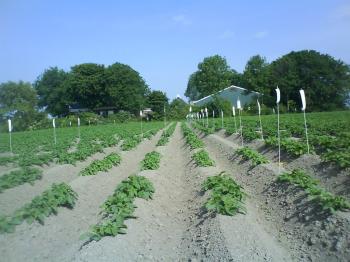
Foto: Prepare yon jaden pou plante pòmdetè (illustrative). Freddy de Hosdent / Wikimedia Commons, CC BY-SA 4.0
Rezime Mondyal sou Pòmdetè
Senk pi gwo istwa yo, pri yo, alèt maladi yo ak evènman yo. Maten jou lasemèn yo, pa gen piblisite.
Ki sa kap vini an
NEPG expects early sprouting in storage and more Colorado beetle and stolbur pressure; it has asked traders and processors to be flexible on quality and delivery specifications this season.
Sous
- VILT — https://vilt.be/nl/nieuws/de-weg-naar-aardappelvelden-vol-robuustere-rassen-is-nog-lang
- Landbouwleven — https://www.landbouwleven.be/26223/article/2026-09-22/lengte-en-grofte-van-aardappelen-zijn-onvoldoende
- Agristo view is a company statement.
Lyen nan materyèl sa a
- peyi
- Bèljik
Istwa ki gen rapò
Peyi Ba: Kiltivatè grenn Friesland kenbe Annabelle pwòp pandan senk jenerasyon san minitubèr.
Ewòp: Klon EU_36 pou maladi mildi anreta a desann rive nan 34% nan echantiyon yo pandan ke EU_43 rezistan an monte rive nan 12%.