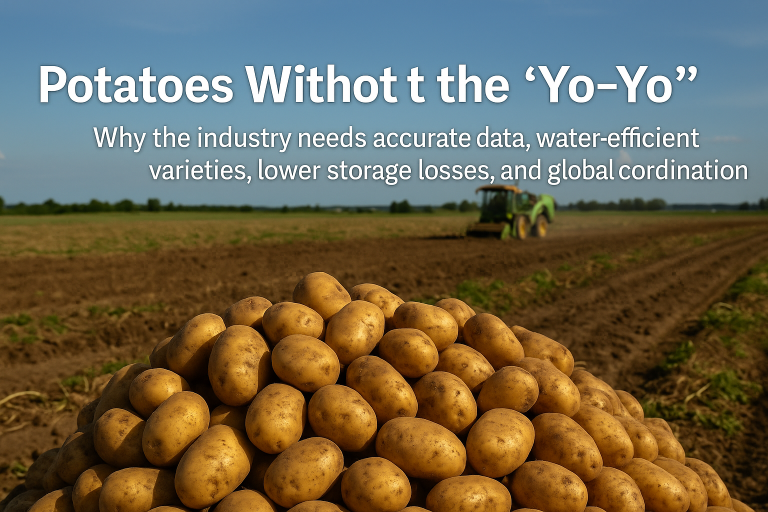
Lavni pòmdetè nan peyi Zend: Yon pèspektiv Simon Heck nan CGIAR.

Soti nan yon entèvyou eksklizif ak Mesye Simon Heck pran pa Devendra K soti nan IndianPotato.com
kòm nan Direktè Jeneral Sant Entènasyonal Pòmdetè a (CIP), Simon Heck is currently on a tour to India where he is sharing his insightful views on the potato industry. His perspective, shaped by frequent visits to India over the last ten years and a deep understanding of global agricultural trends, highlights CIP’s commitment to fostering a sustainable and innovative potato sector in the country.
Yon Patenarya 50 An ak yon Nouvo Kòmansman
CIP, the largest international organization dedicated to potato research, was founded in Peru in 1971. Only four years later, in 1975, CIP began its operations in India, entering into a research collaboration agreement with ICAR. This year marks the 50yèm anivèsè CIP’s presence in India, yon etap enpòtan ke Heck konsidere kòm yon temwayaj sou enpòtans pòmdetè a nan peyi Zend ak wòl peyi Zend nan ekonomi mondyal pòmdetè a. Depi nan kòmansman, yo te rekonèt peyi Zend kòm yon zòn kwasans pou pòmdetè nan lavni. Pandan ke te gen siksè nan devlope nouvo varyete, Heck kwè ke yo bezwen plis pwogrè pou reyalize tout potansyèl sektè a.
Jou lasemèn. Dezabòne ak yon sèl klike.
Renouvèlman atansyon sa a sou peyi Zend se yon repons dirèk a yon chanjman enpòtan nan konsomasyon ak pwodiksyon pòmdetè atravè lemond. Dapre Heck, Kounye a, 58% nan pòmdetè nan mond lan yo kiltive epi konsome nan Azi.. This is a dramatic change from 1975, when consumption was primarily concentrated in Europe and North America. In those traditional hubs, per capita consumption is now declining, but the opposite is happening in Asia, including India, where consumption is increasing. Recognizing the future prospects of the potato industry, the Government of India invited CIP to establish a new research center.
Heck fèk siyen yon 10-ane patenarya agreement with the Government of India through the Ministry of Agriculture and Farmers Welfare. This agreement will serve as a foundation for expanded collaboration between CIP, the Indian government, and a wide range of stakeholders, including research institutions like ICAR’s Central Potato Research Institute, agricultural universities, farmer associations, and private sector investors. The new research center will be strategically located outside Agra, Uttar Pradesh, a major potato production zone, and will be connected to research facilities throughout the country.

Priyorite pou Nouvo Sant Rechèch la: Amelyore Pwodiktivite ak Sistèm Semans yo
Heck te ensiste ke priyorite prensipal yo pou nouvo sant lan santre sou amelyore pwodiktivite pòmdetè ak amelyore sistèm grenn lanMalgre ke peyi Zend se dezyèm pi gwo pwodiktè pòmdetè nan mond lan, kwasans li te sitou kondwi pa elajisman sifas ki anba kiltivasyon an, pa pa yon ogmantasyon nan pwodiktivite pou chak tè oswa dlo ki antre. Avèk tè ak dlo ki vin mwens disponib, Heck te ensiste ke ogmantasyon pwodiktivite atravè syans ak inovasyon enpòtan pou dirabilite alontèm.
CIP aims to improve productivity by developing better varieties that are adapted to changing conditions and market demands. The organization also seeks to enhance the seed system to ensure that farmers have access to high-quality, affordable seed potatoes. The new centre will address the immediate need for high-quality seed potatoes by introducing new technologies and providing advanced training for technical staff from private companies and research institutes. This also involves policy development and oversight to increase investor confidence in a well-regulated sector. Yo prevwa kòmanse premye aktivite sou teren yo an Oktòb 2025.
Rezistans Klima, Resous Jenetik, ak Adaptasyon Rejyonal yo
Heck confirmed that CIP konsidere adaptasyon a chanjman nan klima yon objektif prensipal pou elvaj. Òganizasyon an devlope varyete ki reziste sechrès epi ki gen sik kwasans ki pi rapid, yon estrateji pou diminye kèk risk ki gen rapò ak chanjman klimatik. Varyete sa yo kapab plante tou nan yon peryòd tan ki pi long, sa ki pèmèt kiltivatè yo adapte yo ak yon kòmansman lapli ki pi ta.
CIP, ki kenbe la pi gwo koleksyon resous jenetik pòmdetè nan mond lan, gen pou objaktif pou entansifye echanj jèmoplasm ak enstitisyon Endyen yo. Sa ap bay syantis Endyen yo aksè a karakteristik ki montre pi gwo rezistans fas a chanjman klimatik, kidonk akselere efò elvaj lokal yo epi diminye tan li pran pou devlope nouvo varyete. Heck te note ke sik elvaj pou yon nouvo varyete pòmdetè, ki te konn pran uit a nèf ane, deja redwi a mwatye. Objektif la se pou akselere pwosesis sa a plis toujou pandan chanjman klimatik la ap pran vitès.
Heck also addressed the unique challenges faced by farmers in eastern and northeastern India. He explained that these mountainous regions share similarities with the potato’s origin in the Andes and require varieties adapted to altitude and specific ecological features. CIP plans to step up its work in these areas by linking farmers with their counterparts in other highland regions globally to share knowledge on soil management and to address issues like potato wart using diagnostic tools.

Pi lwen pase pwodiktivite: Nitrisyon ak jesyon apre rekòlt
Heck highlighted CIP’s work on enhancing the nutritional value of potatoes, particularly through biofortification. Using conventional breeding, CIP has successfully enriched potatoes with iron. In Peru, CIP has released two high-iron potato varieties that have been medically proven to significantly reduce iron deficiency in women and children. Germplasm of these varieties has been shared with India for local adaptation. CIP has also had success with sweet potatoes, introducing vitamin A-enriched orange-flesh sweet potato varieties in several Indian states.
Konsènan jesyon apre rekòt, Heck te rekonèt ke pòmdetè se yon rekòt ki ka gate fasil, men li wè sa kòm yon opòtinite biznis enpòtan. Li te ensiste sou nesesite pou teknoloji adaptab ak yon jesyon mache ki pi laj. Li te mete aksan sou ke varyete ki gen pi bon kapasite pou konsève ak teknik pwodiksyon ki konsistan yo esansyèl pou diminye pèt ak gaspiyaj, menm anvan rekòt.
Yon Pèspektiv alontèm pou lavni agrikòl peyi Zend lan
Lè l ap gade 10 lane ki pi devan, Heck te pataje yon vizyon optimis pou peyi Zend. Li te predi yon ogmantasyon nan pwodiksyon patat dous, akòz nouvo sistèm pwodiksyon tankou agrikilti kontra ak yon endistri pwosesis k ap grandiLi kwè ke patat pral vin yon engredyan endistriyèl ki pi enpòtan akòz pri abòdab yo, rezistans yo fas ak chanjman klima, ak ti bezwen dlo ak materyèl.
Pou pòmdetè, Heck prevwa yon pi gwo divèsite varyete k ap devlope pou diferan zòn pwodiksyon ak nouvo itilizasyon nan pwosesis manje. Li kwè tou ke syans ak jesyon pòmdetè pral vin pi efikas ak pi efisyan, menm jan ak legim ki gen anpil valè tankou tomat. Heck te sigjere ke peyi Zend ta ka eksplore itilizasyon responsab byoteknoloji pou devlope varyete ki pi rezistan a maladi epi ki bezwen mwens pwodui agrochimik, yon estrateji ki te reyisi nan lòt kote nan mond lan.
Heck concluded by stating that as India has established itself as a leading potato producer, it will also establish itself as a leading innovator and a global hub for potato and sweet potato research. He sees CIP’s role as helping to accelerate this shift, positioning India’s great scientists and institutions at the forefront of agricultural innovation.
Sous: Entèvyou ak Mesye Simon Heck jan yo te pran l la Devendra K of Endyen pòmdetè
Rezime Mondyal sou Pòmdetè
Senk pi gwo istwa yo, pri yo, alèt maladi yo ak evènman yo. Maten jou lasemèn yo, pa gen piblisite.
Lyen nan materyèl sa a
Istwa ki gen rapò
Peyi Ba: Kiltivatè grenn Friesland kenbe Annabelle pwòp pandan senk jenerasyon san minitubèr.

Lamb Weston: 75 Years of Innovation and a First Retail Launch in Singapore — Exclusive Interview for Potatoes.News