Japon bay plis pase 700 kiltivatè ak machann enfòmasyon pandan revizyon aksè a pòmdetè fre nan Etazini ap pwoche nan dènye etap li.
Takeaways kle yo
- 700 growers and traders joined the MAFF online briefing
- 21 pest and disease species are on Japan's draft risk list
- 2006 is when US potatoes were first allowed, for chips only
- 81.3% of 48 surveyed producers oppose or want safety first
Poukisa li enpòtan
- Pou kiltivatè yo
- Hokkaido growers and seed producers should follow stage-three talks closely and press for strict nematode safeguards, as seed health underpins the whole domestic crop
- Pou procesè yo
- Chip makers already use US potatoes; wider access for table potatoes could add sourcing options, but conditions set in stage three will decide volumes
- Pou komèsan yo
- Importers should prepare for possible new trade in US table potatoes, while noting that no timetable exists and testing requirements may be strict
Rezime 60 segonn
Japan's agriculture ministry MAFF held an online briefing on 18 September on its quarantine review of a US request to sell fresh table potatoes in Japan. More than 700 growers and import traders took part, according to KSB/ANN and FreshPlaza. MAFF has identified 21 pest and disease species of concern in a draft list published on 28 August, which completes the second of three stages; the third stage covers risk-management measures and import conditions. No decision or timetable has been set. The US first asked for access in 2020; since 2006, US fresh potatoes have entered Japan only for chip processing. FreshPlaza names potato cyst nematodes among MAFF's main concerns. A MAFF official said Japan is not obliged to accept measures it finds unacceptable. Japan consumes about 3.5 million tonnes of potatoes a year and grows 2.2-2.4 million tonnes; Hokkaido supplies over 80% of the crop and about 97% of seed.
Japan’s Ministry of Agriculture, Forestry and Fisheries (MAFF) held an online briefing on 18 September on its plant-quarantine review of a US request to export fresh potatoes to Japan for general distribution. More than 700 growers and import traders took part, according to Japanese broadcaster KSB/ANN and FreshPlaza.
MAFF has identified 21 pest and disease species that could enter Japan with US potatoes. The draft list was published on 28 August. According to reports on the briefing, this completes the second of three stages in the review. The third stage will deal with risk-management measures and import conditions. No decision or timetable has been announced.
The United States first requested access for fresh table potatoes in 2020. Since 2006, US fresh potatoes have been allowed into Japan only for chip processing, according to FreshPlaza. FreshPlaza names the potato cyst nematodes Globodera pallida ta dwe apwouve bèso tibebe w la epi G. rostochiensis among MAFF’s main concerns.
Jou lasemèn. Dezabòne ak yon sèl klike.
According to KSB, a MAFF official told participants that Japan is not obliged to accept risk-management measures it considers unacceptable. Growers questioned whether pests that cannot be seen could ever be fully controlled. KSB also reported that the US asked Japan earlier this month to speed up the procedure.
Context
According to agricultural portal Mynavi Agri, Japan consumes about 3.5 million tonnes of potatoes a year and produces 2.2–2.4 million tonnes. Hokkaido grows more than 80% of the domestic crop and about 97% of its seed potatoes. In a survey of 48 producers by the direct-sales platform Tabechoku, 81.3% opposed opening the market or opposed it until safety is confirmed; 2.1% were in favour. The sample is small and not representative.
Japanese chip makers already depend on imported potatoes in part; Calbee expects 240,000–250,000 tonnes from Hokkaido this season.
Poukisa li enpòtan
This is the most concrete step so far toward opening Japan’s fresh-potato market to US suppliers. For US exporters it is a potentially large new outlet at a time of low domestic prices. For Hokkaido, the main concern is phytosanitary: any introduction of cyst nematodes would threaten the seed-potato base that supplies the whole country. The conditions set in stage three will decide how much trade actually follows.
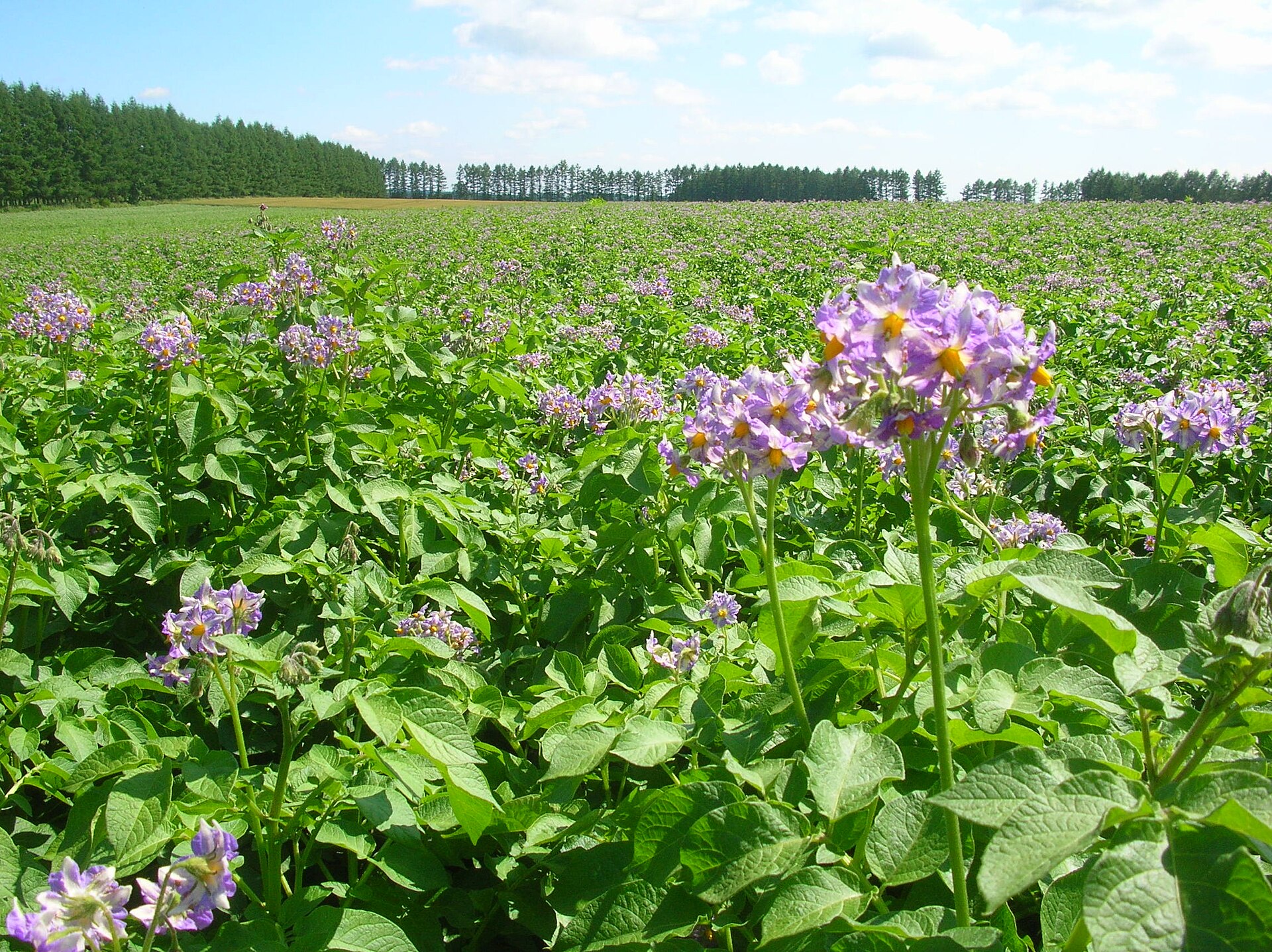
Foto: Potato field in Kamishihoro, Hokkaido (illustrative). pakku / Wikimedia Commons, CC BY 3.0
Rezime Mondyal sou Pòmdetè
Senk pi gwo istwa yo, pri yo, alèt maladi yo ak evènman yo. Maten jou lasemèn yo, pa gen piblisite.
Ki sa kap vini an
MAFF moves to the third stage, on risk-management measures and import conditions. No decision date has been announced. The US has asked Japan to speed up the procedure, according to KSB.
Sous
- MAFF press release (28 Aug 2026) — https://www.maff.go.jp/j/press/syouan/syokubo/260828_1.html
- KSB/ANN — https://news.ksb.co.jp/ann/article/16903892
- Mynavi Agri — https://agri.mynavi.jp/2026_09_16_593184/
- FreshPlaza — https://www.freshplaza.com/asia/article/9874847/japan-identifies-21-pest-risks-in-u-s-fresh-potato-import-review/
- Note: the producer survey (Tabechoku, 48 respondents) is small and not representative.
Lyen nan materyèl sa a
- peyi
- Japon
- Konpayi
- MAFF; Calbee
Istwa ki gen rapò
Tiki: Enstiti Niğde rekòlte minitubèr Super-Elit nan yon sistèm idwoponik.

Byelorisi: Rekòt pòmdetè rive nan 43% nan plan an pandan kiltivatè yo fouye 317,000 tòn.