Peyiba: Flikweert Vision lanse nouvo jenerasyon QualityGrader ak kamera IA ak jiska 30 t/h
Takeaways kle yo
- 30 tonnes an hour is the claimed top capacity of the grader
- 2 working widths are offered: 1 metre and 1.5 metres
- 9 RGB cameras with AI in the larger camera configuration
- 6 upgraded units went to one onion customer earlier in 2026
Poukisa li enpòtan
- Pou kiltivatè yo
- Growers who grade on farm should test any optical grader on their own varieties and defect profile before buying, rather than relying on manufacturer throughput figures
- Pou procesè yo
- A third output stream could let packers and processors keep a middle grade for discount or processing markets instead of rejecting it outright
- Pou founisè
- Camera-based grading is a competitive segment; AI defect recognition and flexible output streams are becoming the features buyers compare
Rezime 60 segonn
Dutch sorting-technology company Flikweert Vision has launched a new generation of its QualityGrader optical sorter for potatoes and other root crops, according to a company press release published by PotatoPro and Potato Business on 20 and 22 September. All specifications are the company's own. The machine comes in widths of 1 metre and 1.5 metres and, according to the company, handles up to 30 tonnes per hour. It uses six or nine RGB cameras with artificial intelligence to detect wireworm, common scab, mechanical damage, growth cracks, greening, Rhizoctonia, rot, stones and clods. Tolerances can be set per defect in the VisionCommand software, and an optional second ejector allows sorting into a third quality stream. The first six upgraded units went to one onion customer earlier in 2026. The company says it has placed hundreds of machines, which has not been verified. No prices were published. Buyers should ask for independent performance data on their own varieties.
Dutch sorting-technology company Flikweert Vision has launched a new generation of its QualityGrader optical sorting machine for potatoes and other root crops, according to a company press release published by PotatoPro on 20 September and Potato Business on 22 September. All technical specifications below are the company’s own.
The machine comes in two widths, 1 metre and 1.5 metres, and according to the company handles up to 30 tonnes per hour. It uses six or nine RGB cameras combined with artificial intelligence to assess each tuber.
The company says the system detects wireworm damage, common scab, mechanical damage, growth cracks, greening, Rhizoctonia, rot, and foreign material such as stones and clods. Tolerances can be set separately for each defect in the company’s VisionCommand software. An optional second ejector allows the machine to sort into a third quality stream instead of the usual two.
Jou lasemèn. Dezabòne ak yon sèl klike.
According to the release, the first six upgraded units were delivered earlier in 2026 to a single customer in the onion sector. Flikweert Vision says it has placed hundreds of machines in the market; this figure has not been independently verified.
Context
POTATOES NEWS reported on the earlier QualityGrader generation in 2024. Several other manufacturers offer camera-based graders for potatoes.
The new generation’s main changes, according to the company, are the higher camera count, the AI-based defect recognition and the option of a third output stream. The press releases do not give prices. The per-defect tolerances and the third stream could suit packers that supply several market segments from one grading line.
Poukisa li enpòtan
In a short-crop year, the value of each tonne of marketable potatoes rises, and so does the cost of mis-grading. A third quality stream can let packers separate a middle grade for processing or discount markets instead of rejecting it outright. Buyers comparing optical graders should ask for independent throughput and accuracy data on their own varieties and defect profiles rather than relying on manufacturer figures.
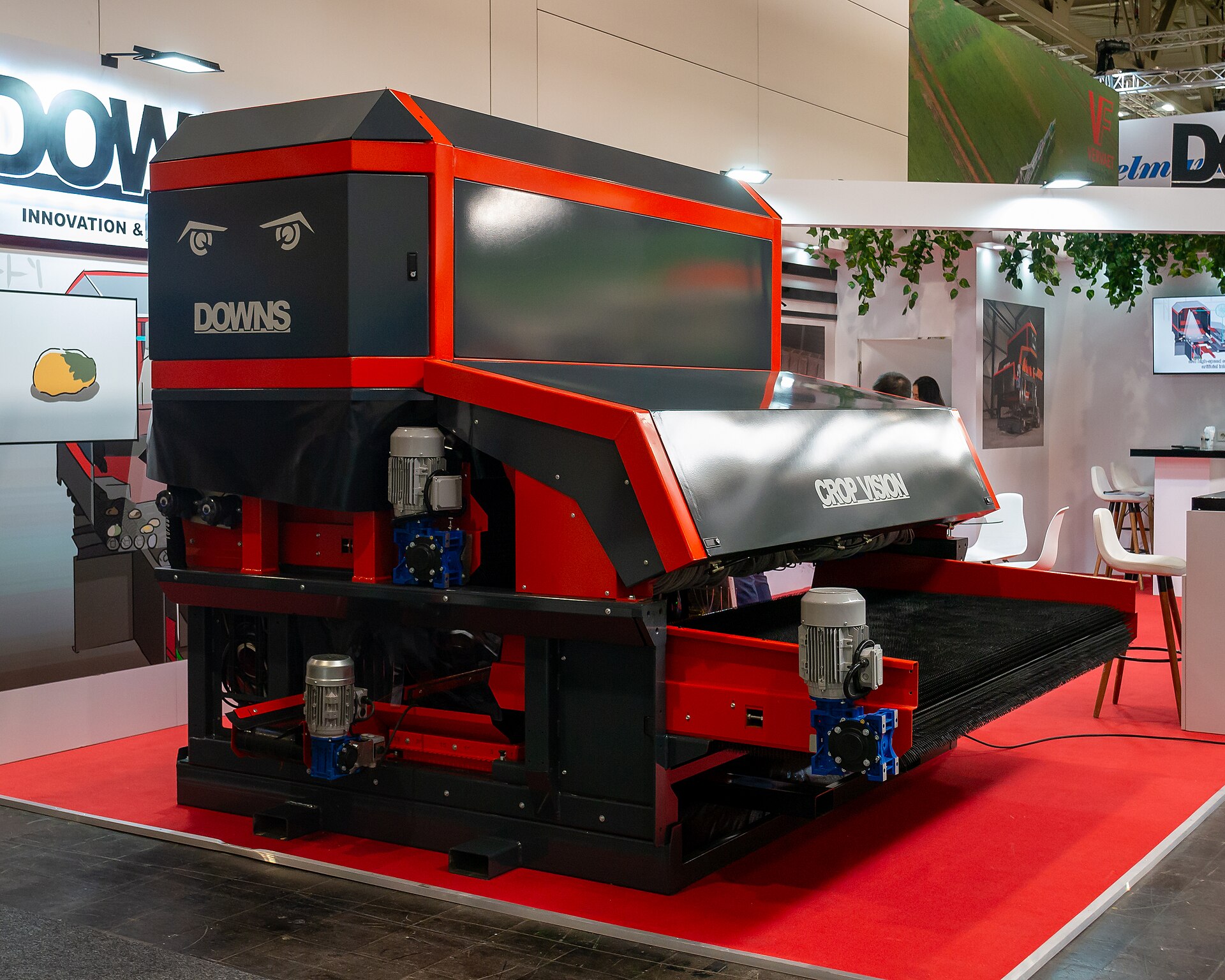
Foto: An optical grading machine at Agritechnica 2023, Hanover; not Flikweert equipment (illustrative). MB-one / Wikimedia Commons, CC BY-SA 4.0
Rezime Mondyal sou Pòmdetè
Senk pi gwo istwa yo, pri yo, alèt maladi yo ak evènman yo. Maten jou lasemèn yo, pa gen piblisite.
Ki sa kap vini an
The company has not published prices or independent test results. Field performance on potatoes, rather than onions, will show how the new generation compares with rival graders.
Sous
- PotatoPro (company press release) — https://www.potatopro.com/news/2026/flikweert-vision-introduces-new-generation-qualitygrader-advanced-potato-optical-sorting
- Potato Business — https://www.potatobusiness.com/process/new-qualitygrader-generation-expands-flikweert-visions-optical-sorting-capabilities/
- According to the company: all technical specifications and the installed-base claim are Flikweert Vision statements.
Lyen nan materyèl sa a
- peyi
- Netherlands
- Konpayi
- Flikweert Vizyon
Istwa ki gen rapò
Almay: Konpayi ki trete lanmidon an kenbe pri kontra 2027 la nan €95/t malgre pèt rannman 10-50%.

Etazini: EPA anrejistre ensektisid ibrid pou tè ki konbine bifentrin ak yon pwodui byolojik.