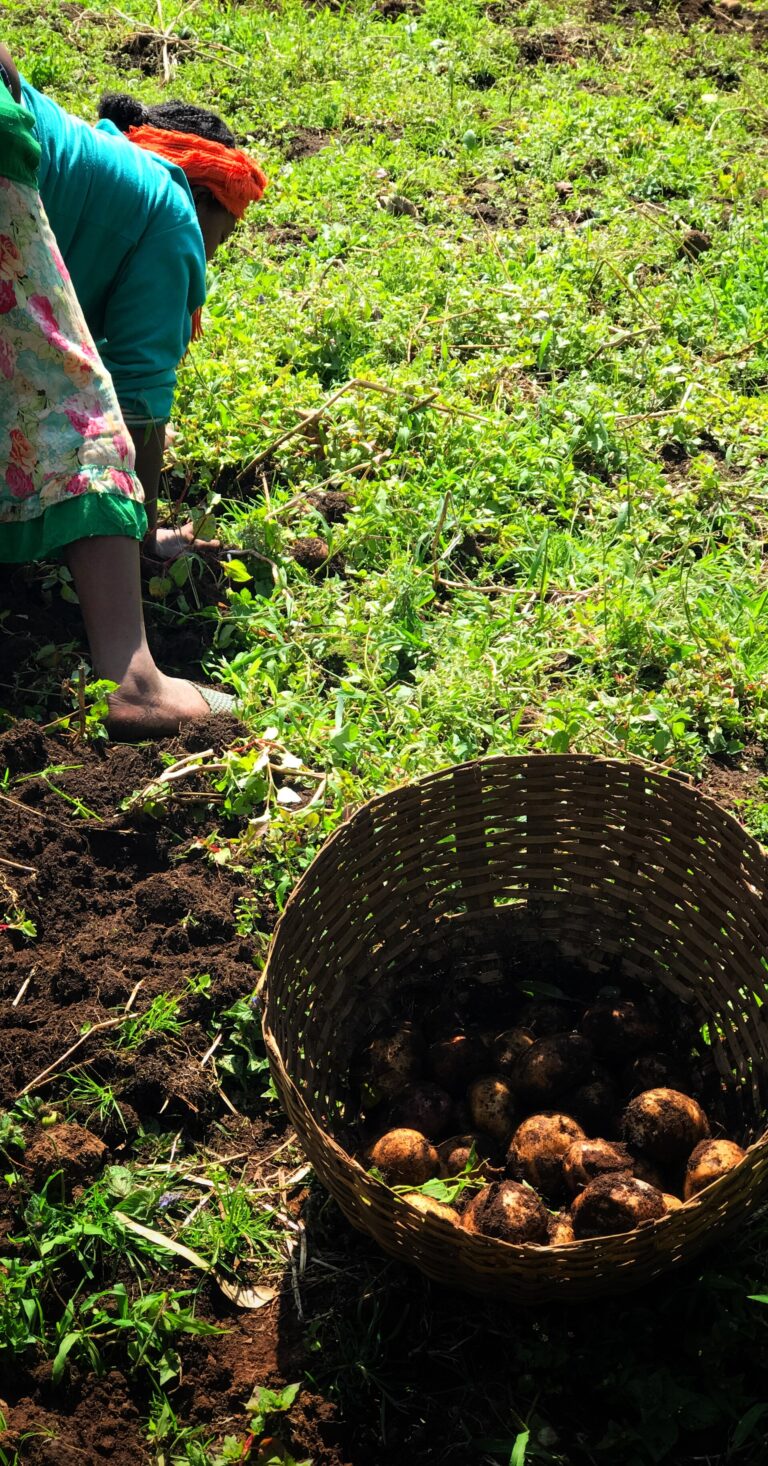
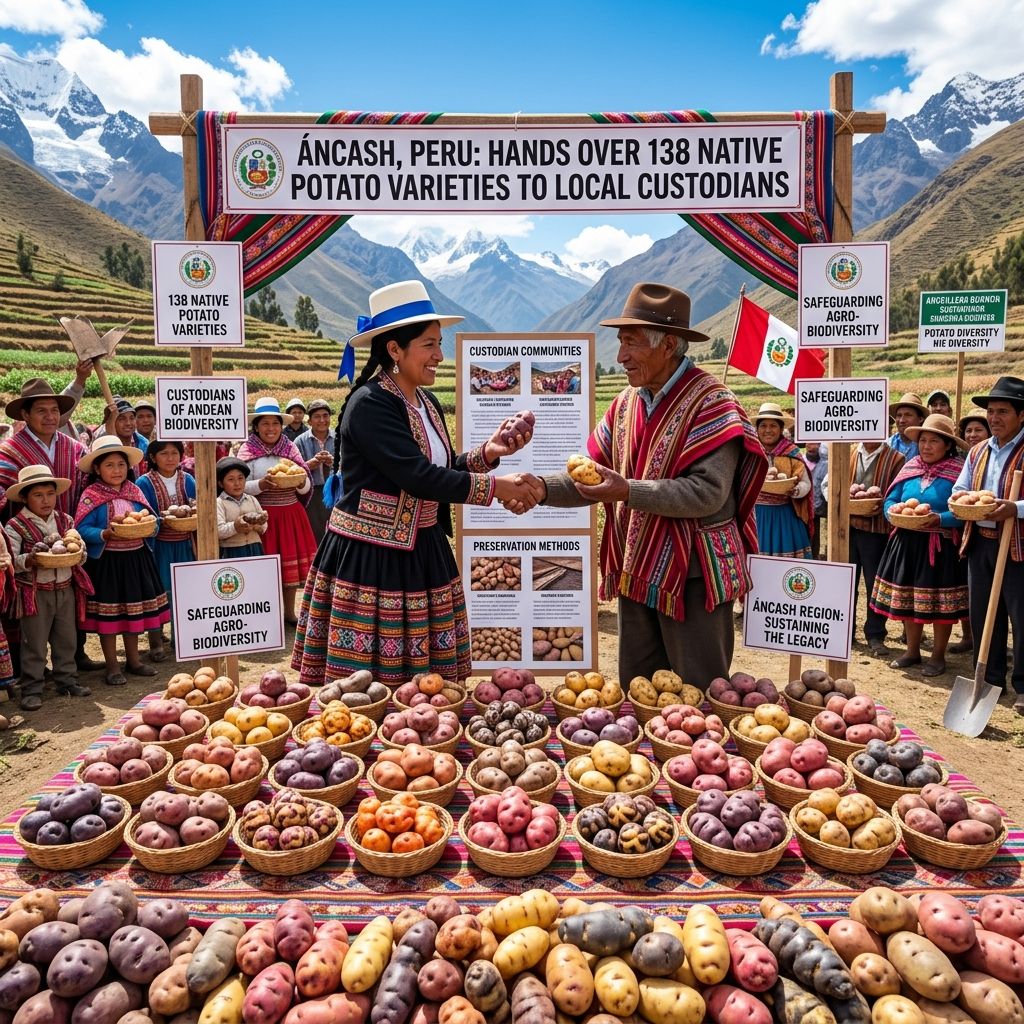
Rejyon Áncash nan Perou a remèt 138 varyete pòmdetè natif natal bay gadyen lokal yo.
Takeaways kle yo
- 138 native potato varieties handed to two Ancash custodians
- 72 varieties go to ecological farm Granja Turmanye
- 66 varieties go to beekeepers' group Ecomiel Independencia
- 138 varieties are about 3% of Peru's 4,000+ varieties
Poukisa li enpòtan
- Pou kiltivatè yo
- On-farm conservation only works if the varieties keep getting replanted; a tuber-based variety can disappear within one or two seasons without continued cultivation.
- Pou envestisè yo
- Native varieties' colours, flavours and textures already have niches in fine dining and speciality snacks; the unresolved volume and duration of this transfer make it too early to size supply from it.
Rezime 60 segonn
Regional agriculture authorities in Peru's Ancash region have entrusted 138 native potato varieties to two local organisations for on-farm conservation: 72 to the ecological farm Granja Ecologica Turmanye and 66 to the beekeepers' association Ecomiel Independencia. The model relies on farmers continuing to plant and select the varieties in real conditions, complementing centralised stores such as the International Potato Center's Lima cryobank, which holds around 3,600 accessions. Peru recognises more than 4,000 potato varieties and has over 711,000 growers, per the agriculture ministry, so the transfer represents roughly 3% of known diversity, an indicative share only. Left undisclosed: the volume transferred, whether it is seed tubers or true botanical seed, and how long the agreement runs - details that matter because a tuber-based variety can be lost within a season or two if nobody replants it.
Regional agricultural authorities in the Peruvian Andes have entrusted seed of 138 native potato varieties to two local organisations. The goal is to keep the region’s genetic diversity alive in farmers’ fields, not only in gene banks.
The Regional Agriculture Directorate of Áncash (Dirección Regional de Agricultura, DRA) split the collection between two recipients. Granja Ecológica Turmanye, an ecological farm, received 72 varieties. Asociación Apícola Ecomiel Independencia, a beekeepers’ association, received 66.
The handover was formalised through an inter-institutional cooperation agreement under a regional ordinance promoting the conservation and revaluation of native potatoes. Regional agriculture director Joel Lázaro Evaristo signed for the DRA. Kety Javier Ramírez and Liz Rodríguez Arévalo signed for the receiving organisations. The DRA’s Agriculture and Livestock Department led the initiative.
Jou lasemèn. Dezabòne ak yon sèl klike.
Conservation in the field
The scheme follows the on-farm, or in situ, conservation model. Under this model, traditional varieties survive because farmers keep planting, multiplying and selecting them under real growing conditions, rather than storing them as accessions in a vault. On-farm work complements centralised collections such as the International Potato Center’s (CIP) cryobank in Lima. CIP opened that facility in 2024, and it holds around 3,600 potato accessions.
Áncash has pursued this approach before. The DRA has previously distributed native potato accessions to growers and monitored the plantings; one recent round covered around 80 accessions. In the Pamparomás district of Huaylas province, smallholders working with a local rural development service have harvested between 160 and 200 native varieties in successive seasons at altitudes above 3,000 metres. CIP itself replanted 110 Áncash native varieties in the region in 2015, returning them to the area where they originated.
Scale and open questions
Peru is home to more than 4,000 potato varieties. According to the Ministry of Agrarian Development and Irrigation (MIDAGRI), more than 711,000 people grow the crop. Against that backdrop, 138 varieties represent roughly 3% of the country’s recognised diversity. The national figure is widely cited but approximate, so this share is indicative only.
Several details have not been disclosed:
- Volim. Neither the directorate nor media reports give the volume of material transferred, in kilograms or in tubers.
- Type of material. The Spanish term grenn could mean seed tubers or true botanical seed. In Andean native potato systems it most likely means tubers.
- Agreement terms. It is not known how long the agreement runs, whether recipients must multiply or return material, or how the plantings will be monitored.
These details matter because on-farm conservation depends on continuity. Unlike a gene bank sample, a potato variety maintained through tubers can be lost within one or two seasons if nobody replants it. The choice of a beekeeping association as one of the two custodians is unusual. It suggests the region is trying to widen its conservation network beyond conventional potato growers, but that network’s long-term capacity is not yet tested.
Why native varieties matter
Andean native potatoes are regarded as a strategic genetic reserve. Among them are types adapted to high altitude, drought, frost and local disease pressure. These traits are increasingly valuable to breeders responding to climate change and emerging pathogens.
Native potatoes also have commercial value. Their unusual colours, flavours and textures have secured niches in fine dining and in speciality snack production. Regional officials say the Áncash initiative aims to support agriculture that is both sustainable and competitive, alongside protecting biodiversity.
Sources: Argenpapa / Agro Perú Informa; Revista Lombriz; Regional Agriculture Directorate of Áncash; MIDAGRI; Agraria.pe; PotatoPro.
Rezime Mondyal sou Pòmdetè
Senk pi gwo istwa yo, pri yo, alèt maladi yo ak evènman yo. Maten jou lasemèn yo, pa gen piblisite.
Ki sa kap vini an
The volume of material transferred, whether it is seed tubers or true botanical seed, and the agreement's duration and monitoring terms are not disclosed. Continuity of replanting will decide whether the varieties survive, since tuber-based stock can be lost within one or two seasons if nobody replants it.
Sous
- Argenpapa / Agro Peru Informa; Revista Lombriz; Regional Agriculture Directorate of Ancash (DRA); MIDAGRI; Agraria.pe; PotatoPro.
Lyen nan materyèl sa a
- peyi
- Perou
Istwa ki gen rapò
Peyi Ba: Kiltivatè grenn Friesland kenbe Annabelle pwòp pandan senk jenerasyon san minitubèr.
Pri pòmdetè mondyal yo, semèn 39: Ewòp ap fèm sou yon rekòt kout pandan Azi rete twòp.