
Mondyal·Depo·Nouvèl
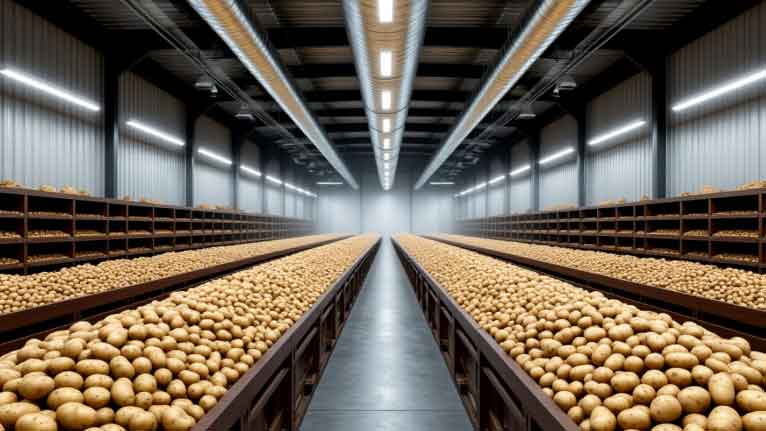
Prepare pou Depo Pòmdetè 2026/2027: Estrateji pou Seche, Ozonize, ak Siprime Jèrm
Takeaways kle yo
- Wet September lifting raises anthracnose risk
- Soft bacterial rot (Pectobacterium) also elevated
- Curing: 14 days at 15-18 C, 95% humidity
- Ventilation at 70 m³/h per tonne
- Ozonation cuts surface microbial load
Poukisa li enpòtan
- Pou kiltivatè yo
- Curing is not a formality this season: wounds from a wet lift are the entry point for Pectobacterium, and suberisation is what closes them before the pile is cooled.
- Pou procesè yo
- Ozonation lowers microbial load in the store without residues, which matters where the crop goes into processing with clean-label requirements.
Rezime 60 segonn
Storage managers face raised risk of anthracnose and soft bacterial rot going into 2026/27, because wet conditions during September lifting combine soil moisture with harvest damage — the two things those pathogens need. The recommended answer is a curing period of 14 days at 15-18 °C and 95% relative humidity, with forced ventilation at 70 cubic metres an hour per tonne. That phase lets superficial wounds heal and suberise, forming a barrier against rot, while surface moisture is drawn off gradually. Ozonation during the same window disinfects the store atmosphere and lowers surface microbial load without leaving chemical residues.
14 jouperyòd geri
15-18 Ctanperati geri
95%relative humidity during curing
70 m³/h per tonneforced ventilation rate
Rezime Mondyal sou Pòmdetè
Senk pi gwo istwa yo, pri yo, alèt maladi yo ak evènman yo. Maten jou lasemèn yo, pa gen piblisite.
Lyen nan materyèl sa a
- peyi
- Mondyal
Istwa ki gen rapò
peyi Letiopi·Afrik·Agronomi
Etyopi: Pwodiksyon pòmdetè ogmante dis fwa depi 2000 pou rive nan 4.09 milyon tòn
Mondyal·Agronomi·Récolte
Pòmdetè rekòlte nan lapli a: Kijan pou seche rekòt la epi kenbe l nan depo
Mondyal·Agronomi·Récolte


