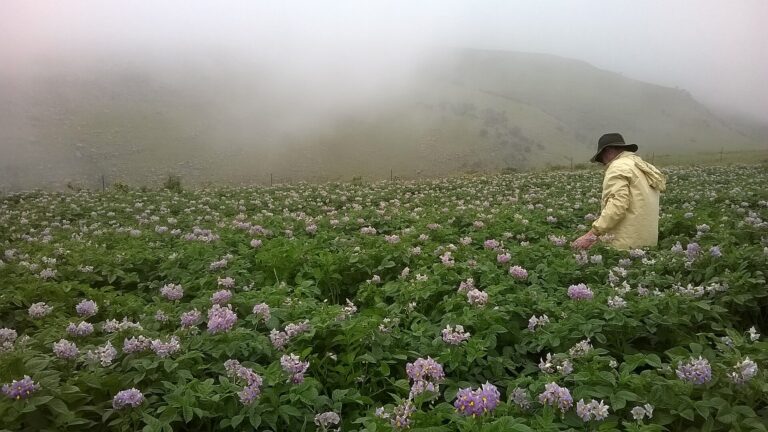
Ouzbekistan: Grenn elit Olandè yo bay 40-50 t/ha nan premye sik grenn pòmdetè domestik Samarkand lan.
Takeaways kle yo
- 6,000 tonnes of elite seed imported from Dutch firm Agrico
- 40 to 50 t/ha harvested on 40 ha in Bulungur, Samarkand
- 60 t/ha reported on private household plots in the project
- 5 varieties: Esma, Arizona, Alouette, Picasso and Agata
Poukisa li enpòtan
- Pou kiltivatè yo
- Uzbek growers should look for certified seed from these domestic multiplication programmes in coming seasons and compare its performance with imported seed
- Pou founisè
- For European seed houses, elite-class sales to local multiplication projects are a growing channel, while demand for lower-class imported seed may shrink
- Pou envestisè yo
- State-backed seed projects with pivot irrigation and land reclamation signal long-term investment in Uzbek potato production; watch second-generation yields
Rezime 60 segonn
A seed-potato project in Samarkand region has harvested its first crop from Dutch elite seed, with yields of 40-50 tonnes per hectare, according to nuz.uz and the state agency UzA. The company Bulungur-Agro Star imported 6,000 tonnes of elite seed from Agrico of the Netherlands, in the varieties Esma, Arizona, Alouette, Picasso and Agata. According to nuz.uz, 40 hectares in Bulungur district yielded 40-50 t/ha and private household plots about 60 t/ha. The harvested seed will be replanted in Nishon district, Kashkadarya, where the Uzagrostar holding runs a project. UzA adds a 300-hectare seed site, 10 centre-pivot systems worth 7.6 billion som and 2,500 hectares of desert being reclaimed. The sources differ on area, 40 against 300 hectares, and yields are company and state figures. The programme follows a decree of 8 September 2025 on seed-potato production and aims to reduce dependence on imported seed and potatoes.
A seed-potato project in Samarkand region has harvested its first crop grown from Dutch elite seed, with yields of 40–50 tonnes per hectare, according to the news site nuz.uz and the state news agency UzA.
The company Bulungur-Agro Star imported 6,000 tonnes of elite seed potatoes from the Dutch breeding and seed company Agrico, both sources report. The varieties are Esma, Arizona, Alouette, Picasso and Agata. According to nuz.uz, which quotes the company’s director, 40 hectares in Bulungur district yielded 40–50 t/ha, while private household plots reached about 60 t/ha.
The harvested seed will be planted again in Nishon district in Kashkadarya region, where the Uzagrostar holding is running a project, nuz.uz reports. UzA adds that the wider project includes a 300-hectare seed-potato site, 10 centre-pivot irrigation systems worth 7.6 billion som, and the reclamation of 2,500 hectares of desert land.
Jou lasemèn. Dezabòne ak yon sèl klike.
Dezakò
The two sources give different areas: 40 hectares in nuz.uz and 300 hectares in UzA. They may refer to different sites or stages of the project. The yields are figures from the company and state media and have not been independently verified. The UzA report was published on 14 September, nuz.uz on 17 September.
Context
The programme follows a government decree of 8 September 2025 on the development of seed-potato production. Uzbekistan relies heavily on imported potatoes and seed; this season Kazakhstan displaced Pakistan as its main potato supplier. The government has also set a target to expand potato areas to 135,000 hectares.
Poukisa li enpòtan
Domestic multiplication of imported elite seed is the step Uzbekistan needs to cut its dependence on imported seed and table potatoes. If yields of this level hold in the next generation, the model could be copied in other regions. For European seed exporters, projects like this are a new sales channel for elite classes, while demand for lower-class imported seed may shrink over time. Local growers should look for certified seed from these programmes in the coming seasons.
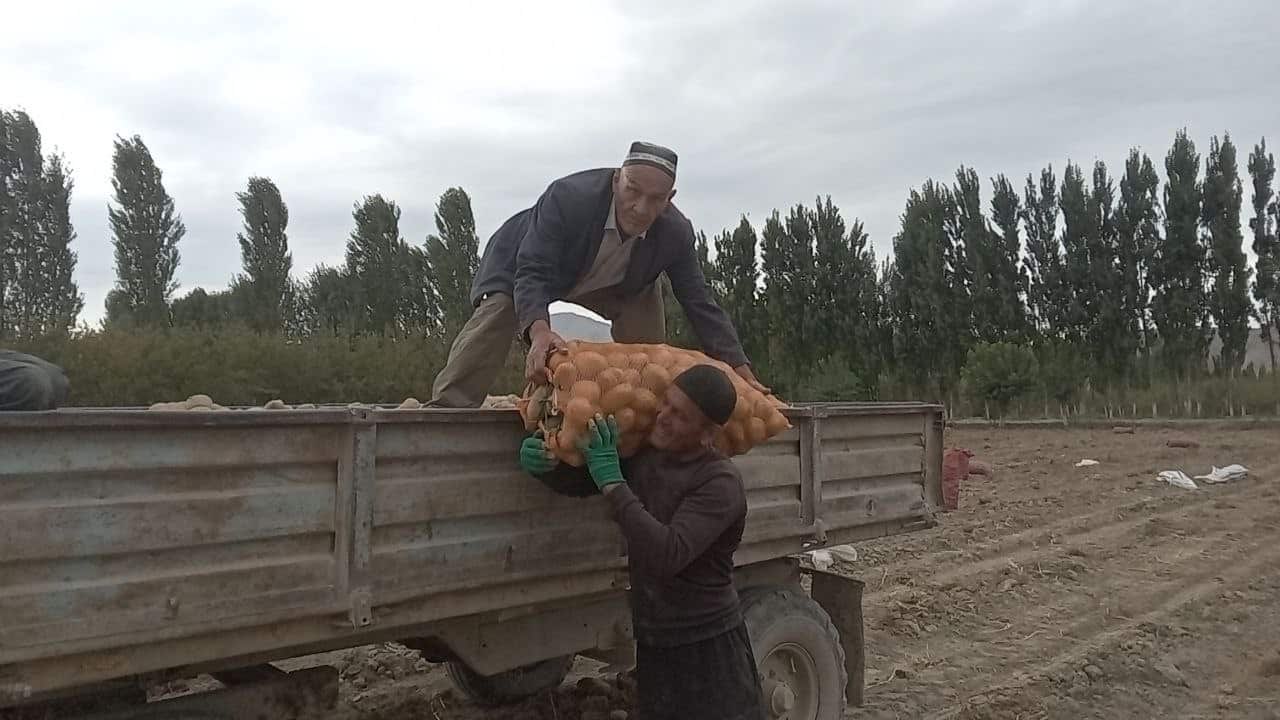
Foto: Potato harvest in Sokh district, Uzbekistan (illustrative). Shoh17 / Wikimedia Commons, CC0
Rezime Mondyal sou Pòmdetè
Senk pi gwo istwa yo, pri yo, alèt maladi yo ak evènman yo. Maten jou lasemèn yo, pa gen piblisite.
Ki sa kap vini an
The harvested seed will be replanted in Nishon district, Kashkadarya. Yields in that next generation will show whether domestic multiplication can hold quality.
Sous
- nuz.uz — https://nuz.uz/2026/09/17/k-uzbekskomu-kartofelyu-vozvrashhaetsya-gollandskij-vkus/
- UzA — https://uza.uz/oz/posts/endi-yerga-shunchaki-urug-qadash-emas-balki-aniq-fan-va-texnologiya-imkoniyatlariga-tayanish-kerak_908660
- Note: sources differ on area (40 ha vs 300 ha); yields are company and state figures, not independently verified.
Lyen nan materyèl sa a
- peyi
- Ouzbekistan
Istwa ki gen rapò
Tiki: Enstiti Niğde rekòlte minitubèr Super-Elit nan yon sistèm idwoponik.

Byelorisi: Rekòt pòmdetè rive nan 43% nan plan an pandan kiltivatè yo fouye 317,000 tòn.