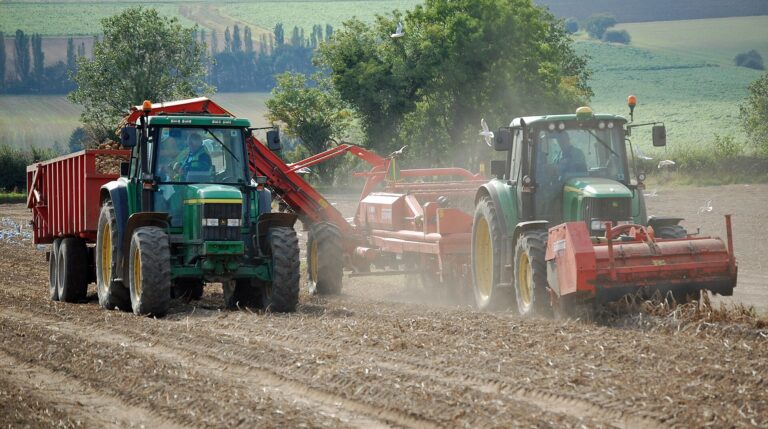
Peyi Ba yo: Croptimal pote yon robo deteksyon viris monte sou traktè ki koute €95,000 bay ti kiltivatè pòmdetè grenn yo.
Takeaways kle yo
- 95,000 euros is the list price of the Croptiscan 3000
- 4,000 euros a year covers service and algorithm updates
- 1.5 ha per hour is the rated output at about 5 km/h
- 175,000 euros buys the self-driving model of equal width
Poukisa li enpòtan
- Pou kiltivatè yo
- Seed growers with 20–100 ha should ask Croptimal for field detection rates against human selectors before budgeting €95,000 plus €4,000 a year.
- Pou founisè
- Selection-service contractors and camera makers now face a tractor-mounted benchmark at €95,000; expect price pressure in the mid-size seed segment.
Rezime 60 segonn
Croptimal is lowering the entry price for machine selection in seed potatoes. Rather than buying an autonomous vehicle, a grower can now hang a 3-metre camera frame on an existing tractor and scan crops for PVY and leafroll at walking-to-tractor pace, roughly a dozen hectares per day. The package costs €95,000 up front and €4,000 annually for support and model updates, against €175,000 for the self-driving robot of the same width. Dutch farm media confirmed the prices and specifications; the company's promises of pre-symptomatic detection and a payback of three to five years come only from its own release. For seed farms that rely on seasonal selectors, this is a cheaper way to test automation, but buyers should ask for independent hit-and-miss rates before treating the scanner as a replacement for human selection. No accuracy figures were published with the launch.
Dutch agtech company Croptimal has launched the Croptiscan 3000, a tractor-mounted version of its AI-based selection robot aimed at smaller seed-potato growers, the Dutch farm titles Nieuwe Oogst and Boerderij reported on 17 and 19 September.
The machine is carried on a tractor and covers a working width of 3 metres. It travels at about 5 km/h, which Nieuwe Oogst translates into roughly 1.5 hectares per hour, or about 12 hectares in a working day. A camera above each row looks for plants infected with potato virus Y (PVY) and leafroll virus, the two infections that most often decide whether a seed lot passes inspection. A shield blocks out ambient light, so the system can operate in bright sunshine and after dark.
The list price is €95,000, plus €4,000 a year for service, support and algorithm updates. Boerderij reports that Croptimal’s self-driving robot of the same width costs €175,000; the self-driving range is built in 4-, 8- and 12-row versions, covering 3, 6 and 9 metres. According to the company, the detection model was trained on data from seven operational Croptiscan machines and twelve separate camera arms.
Jou lasemèn. Dezabòne ak yon sèl klike.
Two further claims — that the system flags infection before symptoms are visible, and that it pays for itself in three to five years — appear only in the company’s English-language release and have not been independently tested. Neither Dutch article reports field accuracy figures.
potatoes.news first covered Croptimal’s self-driving selection robot in July (read the earlier report). The new model does not change the detection principle; it changes the carrier. Instead of a dedicated autonomous vehicle, growers mount the camera frame on a tractor they already own, which is how the company brings the entry price down.
In seed-potato production, virus selection is still largely done by people walking the rows and removing diseased plants before inspectors arrive. The work is seasonal, repetitive and depends on trained eyes. Both Dutch reports frame the tractor-mounted scanner as a way to bring machine selection to seed farms that are too small to justify a self-driving robot.
Poukisa li enpòtan
Virus levels decide the class — and the price — of a seed lot. A lower entry price could move camera-based selection from large specialist farms into mid-size seed businesses. What is still missing is independent data on how many infected plants the system finds and misses compared with experienced human selectors.
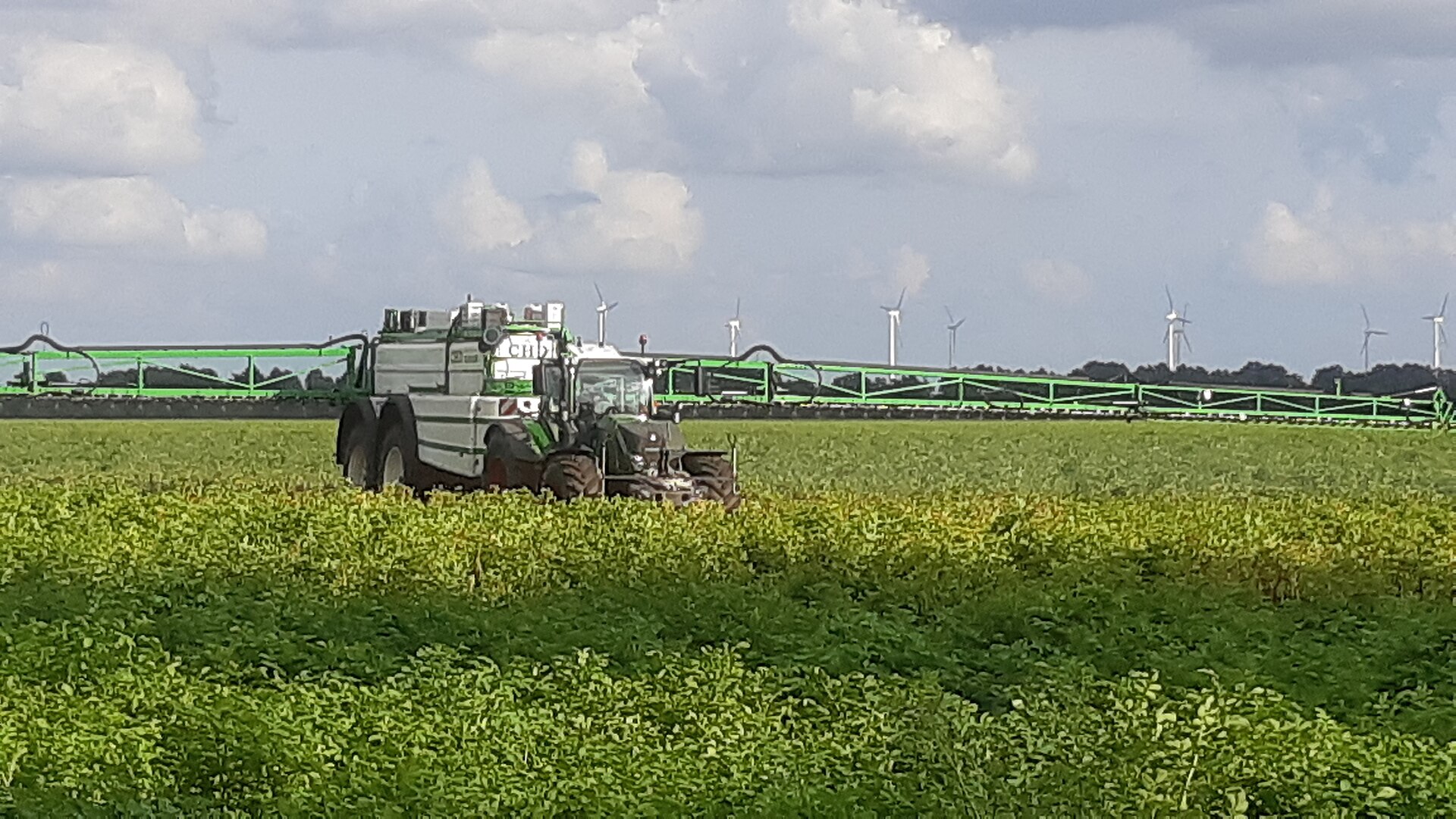
Foto: Yon pulverizatè nan yon jaden pòmdetè nan Peyi Ba yo, pa ekipman Croptimal. (illustrative). JanvdF / Wikimedia Commons, CC0
Rezime Mondyal sou Pòmdetè
Senk pi gwo istwa yo, pri yo, alèt maladi yo ak evènman yo. Maten jou lasemèn yo, pa gen piblisite.
Ki sa kap vini an
The company has not published independent detection accuracy data. Growers will judge the machine in the 2027 selection season, when mid-size seed farms decide whether to buy or keep hiring selectors.
Sous
- Nieuwe Oogst — https://www.nieuweoogst.nl/nieuws/2026/09/17/croptimal-brengt-selectierobot-voor-kleinere-pootgoedtelers
- Boerderij — https://www.boerderij.nl/croptimal-lanceert-gedragen-selectierobot-voor-pootgoedteelt
- PotatoPro — https://www.potatopro.com/news/2026/croptimal-launches-tractor-mounted-croptiscan-3000-ai-based-seed-potato-disease-detection
- Pre-symptomatic detection and 3–5-year payback are company claims (PotatoPro release only).
Lyen nan materyèl sa a
- peyi
- Netherlands
- Konpayi
- Croptimal
Istwa ki gen rapò

Larisi: AGROSALON 2026 Agrikòl Machin Montre a ap louvri nan Moskou soti 6 rive 9 Oktòb
Anviwònman Separasyon sou yon Machin pou Rekòlte Pòmdetè: Kijan Twous Rezen ak Ajitasyon Pwoteje Rekòt la