
Gam pòmdetè trete Larisi a pran fòm: Chips, Pure sèk ak Fri ki soti nan varyete lokal yo
Takeaways kle yo
- 3 processing uses covered: crisps, dry mash and fries
- 1,000 t of Vostorg processed into fries by We Fry nan 2025
- 3,000 t of Vostorg planned for processing by We Fry nan 2026
- 2 harvests a year possible with early Russian varieties
Poukisa li enpòtan
- Pou kiltivatè yo
- Growers supplying processors should ask buyers whether Evpatiy, Artur or Vostorg contracts are available and trial them on a limited area before replacing imported varieties
- Pou procesè yo
- Run factory-scale trials of domestic processing varieties and share fry, chip and flake quality data with breeders; import substitution in raw material depends on this feedback
- Pou founisè
- Seed producers should check demand for certified Vostorg, Evpatiy and Artur seed ahead of the 2027 season as processors scale trials
Rezime 60 segonn
Vasily Byzov, head of the A.G. Lorkh Federal Research Center for Potato, used the State Variety Commission podcast Selektsionnye smysly to set out a lineup of Russian varieties matched to processing lines. Evpatiy is recommended for crisps, Artur for dehydrated mash, developed with the Pogar Potato Factory, and Vostorg for French fries. We Fry grows Vostorg on its own fields: more than 1,000 t were processed last year and more than 3,000 t are planned this year, figures also reported at the All-Russian Field Day in July. Byzov called Vostorg fully competitive with Innovator and named Sadon and Krasa Meshchery as domestic alternatives to Colombo and Gala. We Fry's Lipetsk plant can process up to 200,000 t a year, so 3,000 t remains a trial volume inside a large supply chain. The comparisons with imported varieties are the breeder's own assessment. The official goal is 70% domestic varieties in seed potato by 2030.
Russian breeders are no longer talking only about table potatoes. In the Gossortkomissiya (State Variety Commission) podcast “Selektsionnye smysly,” Vasily Byzov, head of the A.G. Lorkh Federal Research Center for Potato, outlined a set of domestic varieties matched to specific processing lines. The Center shared his comments on its official VK community.
- Chips: ‘Evpatiy’ “has proven itself very well” for chip processing, Byzov said.
- Dehydrated mash: ‘Artur’ was developed together with the Pogar Potato Factory. According to Byzov, it has a high starch content.
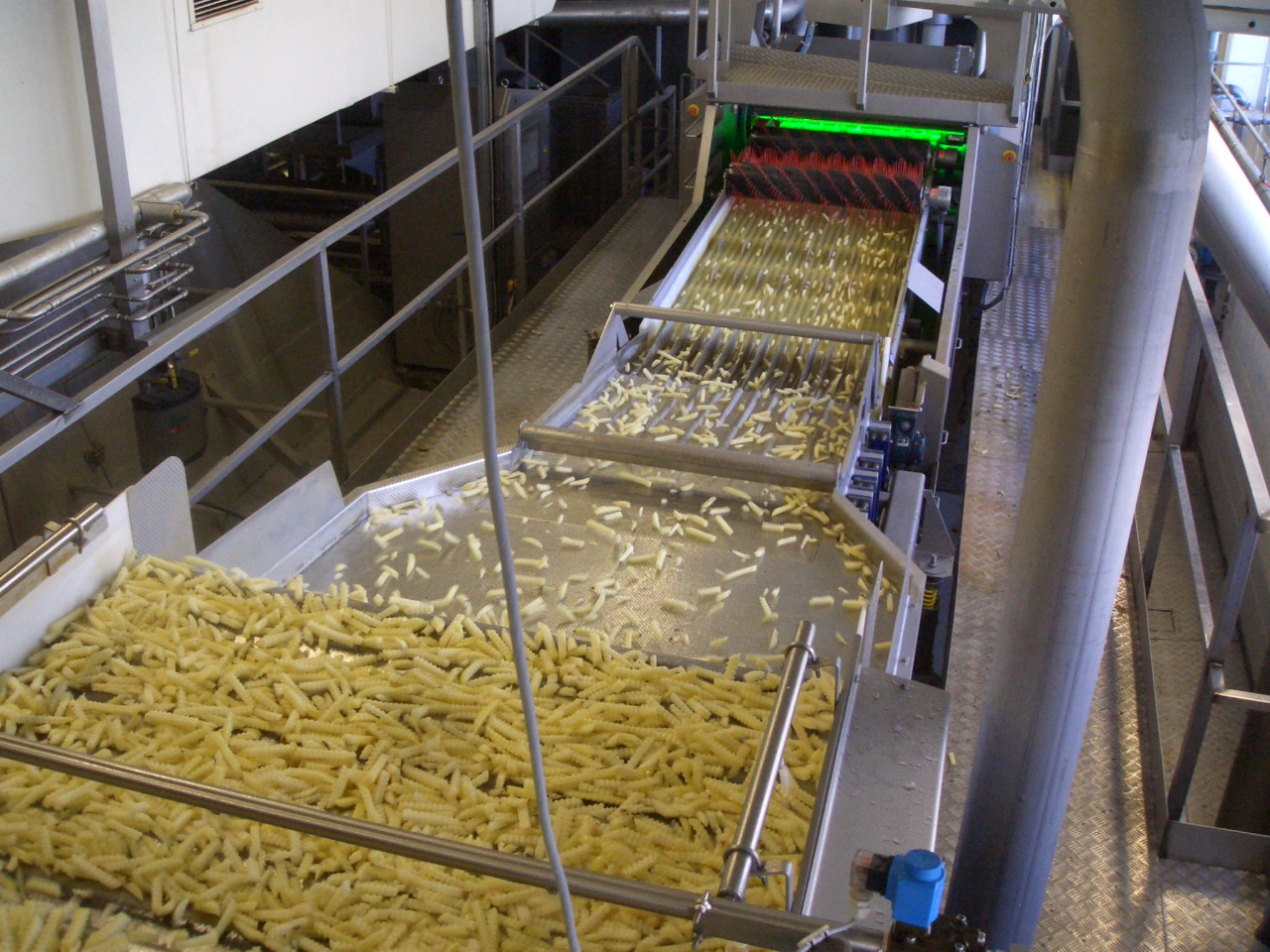
- Fries franse: ‘Vostorg’ is grown by We Fry (Vi Fray), Russia’s leading frozen-fry maker, on its own fields. Byzov said more than 1,000 t were processed into finished product last year and more than 3,000 t are planned this year. He called the variety “absolutely competitive” with ‘Innovator’. The same 1,000 t → 3,000 t figures were reported in July at the All-Russian Field Day in Altai.
For the fresh market, Byzov named ‘Krasa Meshchery’ and ‘Sadon’ as home-bred alternatives to popular imported varieties. He likened ‘Sadon’ to ‘Colombo’ and ‘Krasa Meshchery’ to ‘Gala’. He also pointed to early varieties such as ‘Gulliver’, ‘Meteor’ and ‘Sprinter’, which allow two harvests a year in suitable regions.
Context
We Fry operates a potato processing plant in Lipetsk Region, launched in 2018. Interfax put the plant’s capacity at up to 200,000 t of potatoes a year. Against that scale, 3,000 t of ‘Vostorg’ is still a trial volume, but it is a commercial trial inside the country’s largest fry supply chain. Russia’s official target is to raise the share of domestic varieties in seed potato to 70% by 2030.
Jou lasemèn. Dezabòne ak yon sèl klike.
Poukisa li enpòtan
Processing is where the import dependence of Russian potato genetics has been deepest: industrial lines are built around a few proven Western varieties. A domestic lineup covering crisps, flakes and fries, already tested at factories, is the first real alternative. Processors outside Russia sourcing from the region will want to watch how these varieties perform at scale.
Photo: Optical sorting of potato strips on a French-fry line (illustrative). SortingExpert / Wikimedia Commons, CC BY-SA 3.0.
Rezime Mondyal sou Pòmdetè
Senk pi gwo istwa yo, pri yo, alèt maladi yo ak evènman yo. Maten jou lasemèn yo, pa gen piblisite.
Ki sa kap vini an
The 2026 processing volume of Vostorg at We Fry will show whether the variety holds quality at commercial scale; results for Evpatiy and Artur at factories have not been published.
Sous
- A.G. Lorkh Federal Research Center for Potato — VK post (22.09.2026, 17:36) — https://vk.com/wall-184011872_591
- Altapress — "Vostorg" at the All-Russian Field Day, 24.07.2026 — https://altapress.ru/story/prosto-vostorg-v-rossii-sobirayutsya-virashchivat-i-vivodit-eshche-bolshe-kartofelya-fri-391243
- Interfax — We Fry 2024 results — https://www.interfax.ru/business/1020518
- POTATOES NEWS — Russian "Vostorg" Takes Center Stage (27.07.2026) — https://potatoes.news/russian-vostorg-takes-center-stage-domestic-fries-potato-set-to-replace-imports/
- Variety comparisons are the breeder's own assessment.
Lyen nan materyèl sa a
Istwa ki gen rapò
Mondyal: Nematod kist pòmdetè a diminye sèlman 10-30% pa ane san yon lame, sa ki fè wotasyon an ralanti.
Mondyal: Ki sa ki fè yon bon varyete pòmdetè pou chips, soti nan 20-25% matyè sèk rive nan sik ki ba


